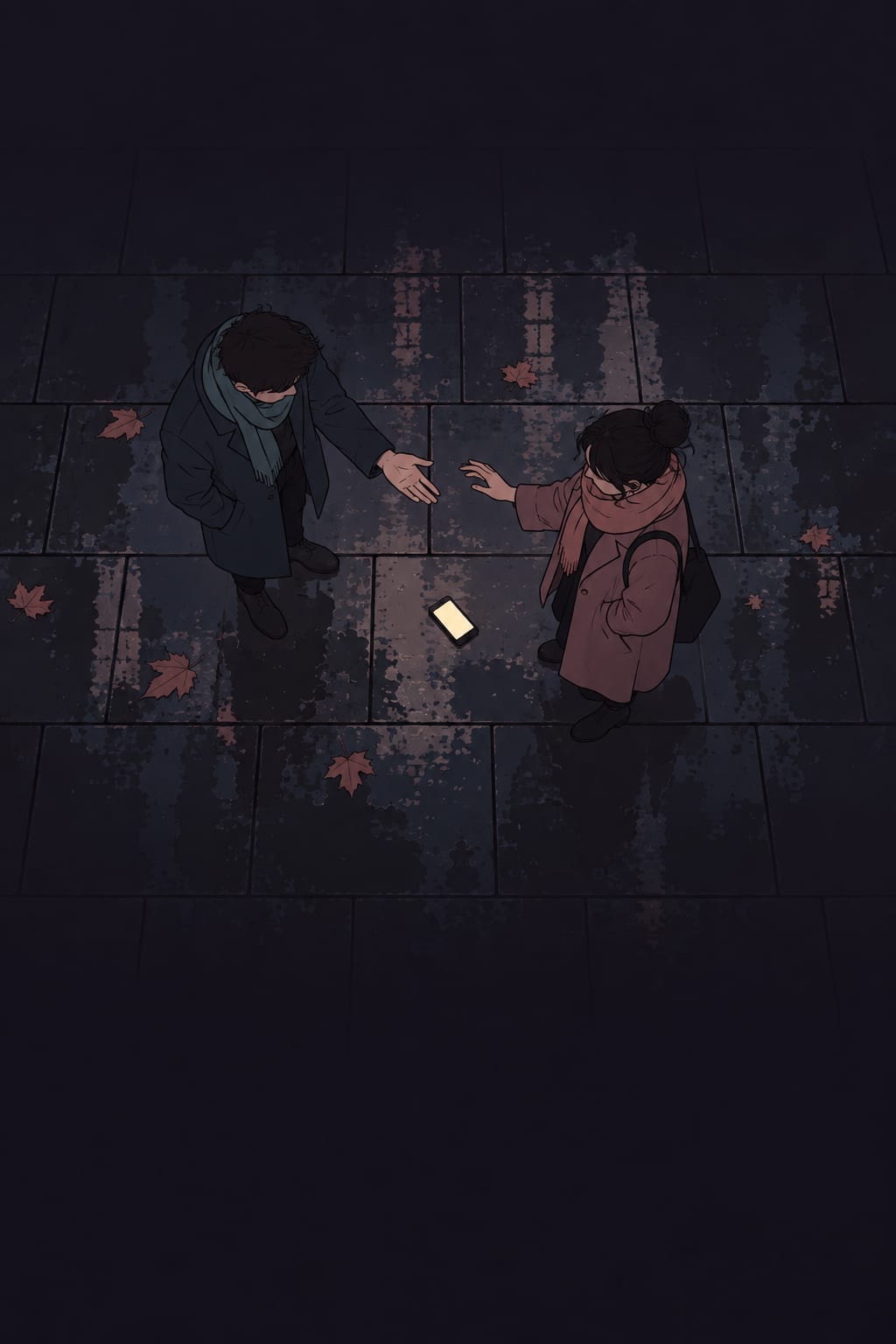
Containing It
Welcome to The Trust Times, our magazine about the science of building trust. When someone lets people down, how far does the damage travel? According to the studies in this issue, it’s not as far as you might fear. Adjust your contingency thinking accordingly.
The first study we’ve highlighted is from Frontiers in Sociology. Austrians rated how much they trust people they talk to online but have never met. I chose this study because it’s relevant to the prospective customers any of us meet online. It turned out that the more respondents said they trusted people in general, the more they tended to trust strangers online.
The second study is from the British Journal of Political Science. Does a scandal among people in an institution make people trust the institution less? The data found that the blame was placed on the offenders, not the institution, even by people most directly impacted.
The third study is from Scientific Reports. Does a false alarm destroy trust in an alarm system in a high stakes situation? In one case, the answer was no. During a war, an earthquake alarm went off across northern Israel for an earthquake that never came. People who got the false alarm said they would keep following earthquake alerts about as readily as people elsewhere in the country who never received it.
I chose these three because each one traces how far trust, or a blow to it, travels from where it started. Problems are a part of life; understanding their implications can help us be better prepared.
Three more great studies on trust next week.
Sources · Issue No. 12
About This Issue
Three peer-reviewed studies on how trust is built, retold in plain language. The “at your desk” sections are our editorial application, not claims made by the researchers.
How far trust travels: a person’s trust in people went with how far they trusted strangers online, an MP’s scandal stayed with the MP, and a false earthquake alarm left the people who got it about as ready to heed the next one.
In our previous issue we covered three studies on why a record a client can check outweighs a promise. Read the previous issue.
People Who Trusted Most People Also Trusted Strangers Online More
1,434 Austrians rated how much they trust people online they have never met in person. Trust in people in general was the strongest predictor of the answer that the researchers found, ahead of trust in parliament. That could change how you relate to the prospective customers who discover you online.
Hadler, M., Vrečar, B., & Schaffer, R. (2025). Generalized trust as a foundation for online trust: Findings from Austria, Greece, Poland, the Philippines, and South Africa. Frontiers in Sociology, 10, 1504812. Open access: doi:10.3389/fsoc.2025.1504812

Early in 2024, envelopes went out to 3,800 homes across Austria, addressed to people drawn at random from the national register of residents. The survey inside could be answered online or, after two reminders, on paper. About 1,500 came back, and the 1,434 who use the internet are the people in this story.
Two of its questions asked about trust. The first was the old standard: would you say that most people can be trusted, or that you can’t be too careful in dealing with people?
The second question asked how much you trust people you communicate with on the internet but have never met in person.
Markus Hadler, Boštjan Vrečar, and Rebecca Schaffer, sociologists at the University of Graz, wanted to know whether trust in strangers online is a separate kind of trust, or the trust a person already has in people, carried onto the internet. The survey’s answers pointed to the second.
The survey
Of the 1,546 people who sent the survey back, the researchers kept the 1,434 who use the internet. Each rated both kinds of trust from zero to ten. They also answered questions about the rest of their lives: their age and income, where they get political news, whether they had been harassed online, and how much they trust the Austrian parliament and courts.
The researchers first looked at which of those things went with trust in strangers online, leaving trust in people out of the picture. Then they added trust in people, to see what it changed.

What they found
Strangers online got little trust. On average, people rated them a little over two out of ten, against about four and a half for people in general, and a large group gave them no trust at all. The researchers note that part of the gap comes from the wording: the question asked about people never met in person.
Without trust in people in the picture, trust in the Austrian parliament went with trust online. So did being younger, being a man, and trusting social media for political news.
Then trust in people went in. It became the strongest predictor of trust in strangers online, stronger than anything else the researchers measured, and trust in parliament no longer made a reliable difference. The more someone trusted most people, the more they tended to trust the stranger on the other side of the screen.
Trust in people had its own companions. In the same survey, it went most with trust in the Austrian courts, and with a feeling of being in control of life’s problems.
Some other ties held. People who had more contact online with others who share their politics trusted strangers online more, and so did younger people and men.
A second look, in five countries
The researchers checked the pattern in trial-run survey data from Austria, Greece, Poland, the Philippines, and South Africa, which they treated as a rougher test. Trust in people again came out ahead of trust in parliament, by a narrower margin. In a separate analysis, trust in people, trust online, and trust in parliament moved together as a group, and trust in people was the most closely tied to it.
Their conclusion is that trust in strangers online is not a separate kind of trust. It is an extension of the trust a person already has in people generally. The two answers were far from identical, and the authors call the overlap moderate. But the answer on the envelope’s first question said more about the second than anything else they asked.
What This Could Mean at Your Desk
A prospect who finds you online brings their trust with them. To someone who has found you through a website, a podcast, or a LinkedIn post, you are the stranger in the survey’s second question. How far they trust you at the start may say more about how they see people in general than about anything on your page. And the starting point is low: people in the survey gave strangers online a little over two out of ten.
Don’t read early caution as a verdict on you. A prospect who asks for references twice, or wants every figure in writing, may simply be someone who believes you cannot be too careful in dealing with people. Meet that with patience and paperwork, not a harder pitch.
Move out of the stranger category early. The stranger in the survey was someone never met in person, and in the trial run the same question without the words ‘never met in person’ drew higher trust. That gap came from how the question was worded, not from anything anyone did. But it is a reminder that someone you have never met is the low-trust category, and a video call and then a meeting in person take a prospect out of it.
The bottom line
Austrians who trusted most people also tended to trust strangers online more, and trust in people was the strongest predictor of trust online that the researchers found. Trust in parliament, which seemed to matter at first, stopped making a reliable difference once trust in people was counted.

Voters Marked Down Their Own MP After a Scandal, but Not Parliament
When the 2009 expenses scandal broke, British voters whose own MP was implicated approved of that MP less. Across 16,429 voters, the MP’s part in the scandal made no measurable difference to their trust in Parliament, in politicians, or in democracy.
Kelly, E., & Tilley, J. (2024). Misconduct by voters’ own representatives does not affect voters’ generalized political trust. British Journal of Political Science, 54(4), 1496-1505. Open access: doi:10.1017/S0007123424000383

In 2009, The Daily Telegraph began publishing what members of the British Parliament had claimed on expenses. The coverage ran for weeks across every major outlet, and The Times called it ‘Parliament’s darkest day’. One MP, Sir Peter Viggers, had claimed for a floating house for the ducks on his pond.
Voters were furious. The next year, nine in ten people in a national election survey agreed that ‘The way some MPs have claimed expenses makes me very angry’. Only seven in a hundred agreed that what MPs claim for expenses ‘really isn’t that important’.
Edmund Kelly and James Tilley, political scientists at the University of Oxford, used the scandal to test a common explanation for falling trust in politics: when your own representative is caught misbehaving, you lose faith in the whole system. They found that voters did mark down their own MP. Their trust in Parliament and in politicians did not measurably move with it.
A scandal with a score
Britain elects one MP for each local constituency, and MPs from every major party were caught up in the claims. That made it possible to compare voters whose own MP was deeply implicated with voters whose MP was barely touched. The researchers scored each MP on the money involved, including what an official review later told them to repay, and on how heavily the media covered their claims.
They matched those scores to 16,429 people in 608 constituencies who answered the British Election Study in 2010, and asked three questions in order. Did voters know their own MP was implicated? Did they think less of that MP? And did it carry over to their trust in Parliament, in politicians as a group, and in democracy, or to a belief that the expense reports proved most MPs corrupt?
What they found
Voters knew. The more heavily the media had covered an MP’s claims, the more likely that MP’s constituents were to say their MP had been involved. An average voter in Viggers’s constituency scored more than twice as high on that belief as an average voter represented by Ann Widdecombe, whom the researchers describe as more frugal.

Voters also thought less of their own MP. Going from the least implicated MP to the most implicated one lowered approval by a tenth of the scale. The drop was modest, and in line with the small share of the vote that implicated MPs were estimated to lose. Media coverage counted for more than money: the MPs whose claims got the heaviest coverage lost the most approval.
Then came the test the study was built for. None of the scandal scores made a measurable difference to any of the four measures of wider trust. The estimates were close to zero and pointed in no consistent direction, and for trust in Parliament and in politicians, the media score even leaned slightly positive. Voters with a heavily implicated MP trusted Parliament about as much as voters whose MP was barely touched.
The result held among the voters who knew the most about politics, and through a series of other checks.
Already there before the scandal
The researchers also followed a group of the same voters from 2005 to 2010. Their satisfaction with democracy barely changed from 2008 to 2009, whether or not they believed their MP was involved. Those who believed their MP was involved had been less satisfied all along, which the authors read as a sign that this kind of trust is partly a matter of disposition.
Why did the damage stay with the MP? One explanation the authors offer is that voters expected to punish implicated MPs at the next election, and at the ballot box they later did.
What This Could Mean at Your Desk
Expect clients to judge the person who let them down. Voters knew which MP had claimed for the duck house, and they marked that MP down. A client whose trade went in late, or whose transfer stalled, may hold it against the person responsible more than against advisors in general.

Give the client someone to hold to account. One reason the authors offer for why trust in the system held is that voters could vote the MP out. When something goes wrong, name who owns the fix and when it will be done, so the client has a person and a date to hold on to.
Read long-held doubt as long-held. The voters who believed their MP was involved had been less satisfied with democracy long before the scandal broke. A client who distrusts the whole industry may have arrived that way, and your own record with them is the part you can change.
The bottom line
In the 2009 expenses scandal, British voters knew when their own MP was implicated and approved of that MP less. Their trust in Parliament, in politicians, and in democracy showed no measurable change compared with voters whose MP was barely touched.
People Who Got a False Earthquake Alarm Were About as Ready to Heed the Next One
In October 2024, a planned blast set off Israel’s first public earthquake alert, sent to more than a million people. A survey of 1,043 adults found that those who got the false alarm were about as willing to follow future alerts as those who did not: nine in ten in both groups.
Yagoda-Biran, G., Nof, R. N., & Zwebner, Y. (2026). Monitoring public reaction to an unnecessary earthquake early warning alert. Scientific Reports, 16, 4715. Open access: doi:10.1038/s41598-026-37958-1

At 7:02 on a Saturday morning in October 2024, phones and sirens across northern Israel sounded an alarm. The tone was close to the missile siren people there had heard almost daily for a year. Five seconds later, a voice said ‘Earthquake’ three times.
There was no earthquake. The army had set off a planned demolition of an underground site across the border in southern Lebanon, and the country’s earthquake warning system read the blast as a magnitude 5.2 quake. More than a million people got the alert. It was the first public alert the system had ever sent.

Gony Yagoda-Biran and Ran Nof of the Geological Survey of Israel, and Yonat Zwebner of Reichman University, saw a chance to answer a question that worries anyone who runs a warning system. Does one false alarm teach people to ignore the next one?
The survey
Within two days they began surveying 1,043 adults from an online panel, both in the north where the alert went out and in parts of the country it never reached. Because the alert stopped at a line on the map, they could compare people who got it with people who did not.
The central question was plain. In light of the false earthquake warning on that Saturday, will you continue to follow public guidelines every time there is an earthquake warning? They also asked how legitimate a false alarm is, how tolerant people felt of one, and what people had done when the alarm went off.
What they found
Among those who answered a plain yes or no to whether they got the alert, 462 had and 490 had not.
The false alarm made no measurable difference to people’s willingness to follow the next one. Nine in ten of those who got it said they would definitely or probably keep following earthquake alerts, and so did nine in ten of those who did not. About six in ten in each group said definitely.
Getting the alert also did not change how legitimate people thought a false earthquake alarm was, or how tolerant they felt of one. About seven in ten, in both groups, still wanted to be warned about any quake they could feel, even one that did no damage. Age was the one consistent difference: older people were more tolerant of false alarms and more willing to follow the next one.
One respondent wrote: ‘How can you not be tolerant? It is obviously very stressful, but mistakes happen, and it is better to have these kinds of mistakes than not to have alerts when needed.’
Where the alarm fell short
Most people acted on the alert, but many did not understand it. Four in five of those who got it did something, most often moving into the reinforced safe room many Israeli homes have. But nearly three in ten did not realize it was an earthquake alert, and about as many could not at first tell it from a missile siren. In Israel, the advice for an earthquake is to get out of the building if possible, or into a reinforced room or a sturdy stairwell.
People in both groups rated a false earthquake alarm as somewhat less legitimate than a false missile alarm. One explanation the authors offer is that the missile warnings had years of credibility behind them, while the earthquake system was new and still earning its standing.
What This Could Mean at Your Desk
Don’t let one unneeded warning stop the next. Advisors sometimes hold back a call about a risk for fear of crying wolf. After a false alarm went to more than a million people on a Saturday morning, the people who got it were about as ready to follow the next one as people who never heard it.
Tell clients what to do, not only that something happened. People acted on the alarm, but three in ten could not at first tell which danger it meant. A note about a market drop, a phishing scam, or a custodian outage works harder with one clear instruction: call us before selling, don’t click the link, expect the statement on Friday.

Say plainly when a warning turned out to be unneeded. The respondent who stayed tolerant did so knowing it was a mistake, and that mistakes happen. Explain what happened and why the warning went out, so the client can make the same judgment.
Keep the count low. The study measured a single false alarm. It says nothing about the third or the fourth, so save the urgent call for the times that are urgent.
The bottom line
A false earthquake alert went to more than a million people in northern Israel during a war. Those who got it were about as willing to follow future earthquake alerts as people who did not, nine in ten in both groups, and no less tolerant of false alarms.
The Trust Times is a running collection of independent, peer-reviewed research on how trust is built. Each issue distills a handful of studies into plain language, with a practical note on what it means in practice.